
Disclaimer
I work at Oracle. This article is not official Oracle communication and does not represent the company’s views. It’s my personal attempt to understand Oracle as a case study.
Recently, I watched a video about Oracle’s history and realized I didn’t actually have a calm, structured mental model of the company. I knew the “Oracle Database” story, I knew Oracle had a big enterprise footprint… but the composition of Oracle (products, strategy, acquisitions, culture, business mechanics) felt like a giant map I’d only seen in pieces.
So I did what curious people do: I started taking notes.
My goal here is simple: help other curious readers understand what Oracle is, how it evolved, and how a company of this scale is “built.” Not to judge. Not to praise blindly. Just to see it clearly.
What is Oracle, in simple terms?
If you’ve never worked in enterprise tech, “Oracle” can sound abstract. Like a logo you see on job posts, invoices, or airport ads.
A simple way to think about Oracle is:
Oracle is a company that sells “the operating system of business.”
Not literally your laptop operating system, but the software and infrastructure that large organizations depend on to run core operations like:
- storing and securing critical data
- processing transactions reliably (money, inventory, orders, HR events)
- running core business suites (finance, HR, supply chain, customer processes)
- operating cloud infrastructure at scale
A lot of Oracle’s products sit in the parts of the tech stack most consumers never see… but many enterprises can’t function without them.
Oracle itself describes the company as building enterprise technology across database, applications, and cloud.
A condensed history: database → applications → cloud & AI
Oracle’s story is easiest to follow if you view it in “chapters,” each one expanding where Oracle plays in the stack.
Chapter 1 — The relational database origin story (late 1970s →)
Oracle was founded in 1977 by Larry Ellison, Bob Miner, and Ed Oates (originally as Software Development Laboratories). Early inspiration came from the relational database model (Edgar F. Codd’s work), and Oracle’s identity became tightly linked to commercializing relational databases at scale.
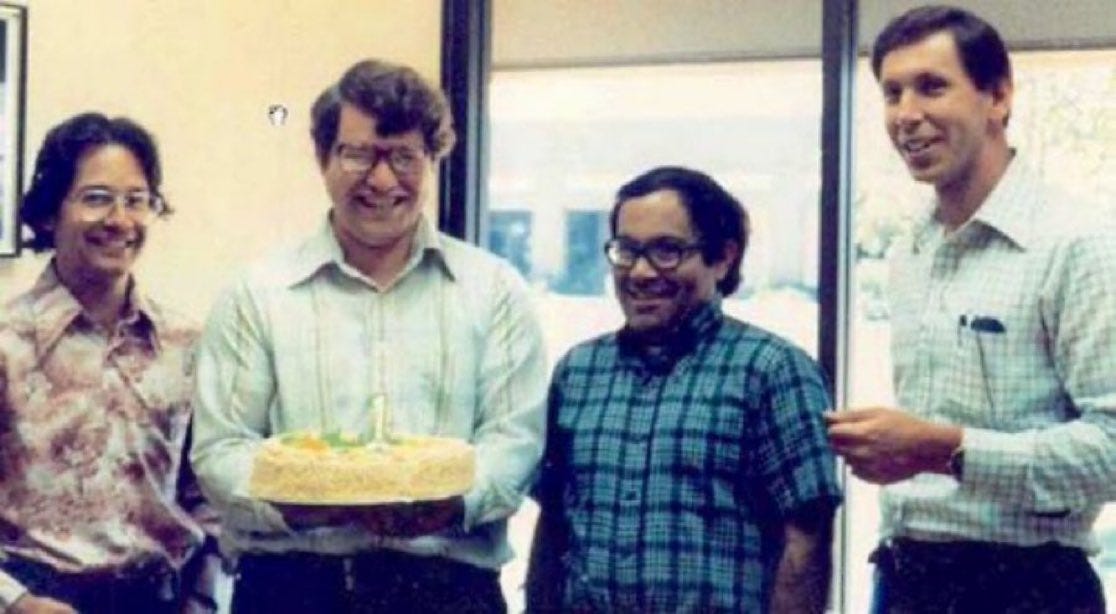
This is the foundational idea: if you control the data layer for enterprises, you become deeply embedded.
Chapter 2 — From “database company” to enterprise software company (1990s → 2000s)
As enterprise IT matured, databases were no longer “enough” to define the full enterprise stack. Oracle expanded into enterprise applications (ERP, HR, CRM), and a huge part of that shift was accelerated through major acquisitions (more on this below).
Chapter 3 — Cloud, distributed infrastructure, and AI (2010s → now)
Over the last decade, enterprise software economics have been reshaped by cloud delivery and hyperscale infrastructure. Oracle’s cloud narrative today centers on OCI (Oracle Cloud Infrastructure) and a “distributed cloud” approach that includes public cloud regions and hybrid / dedicated options.
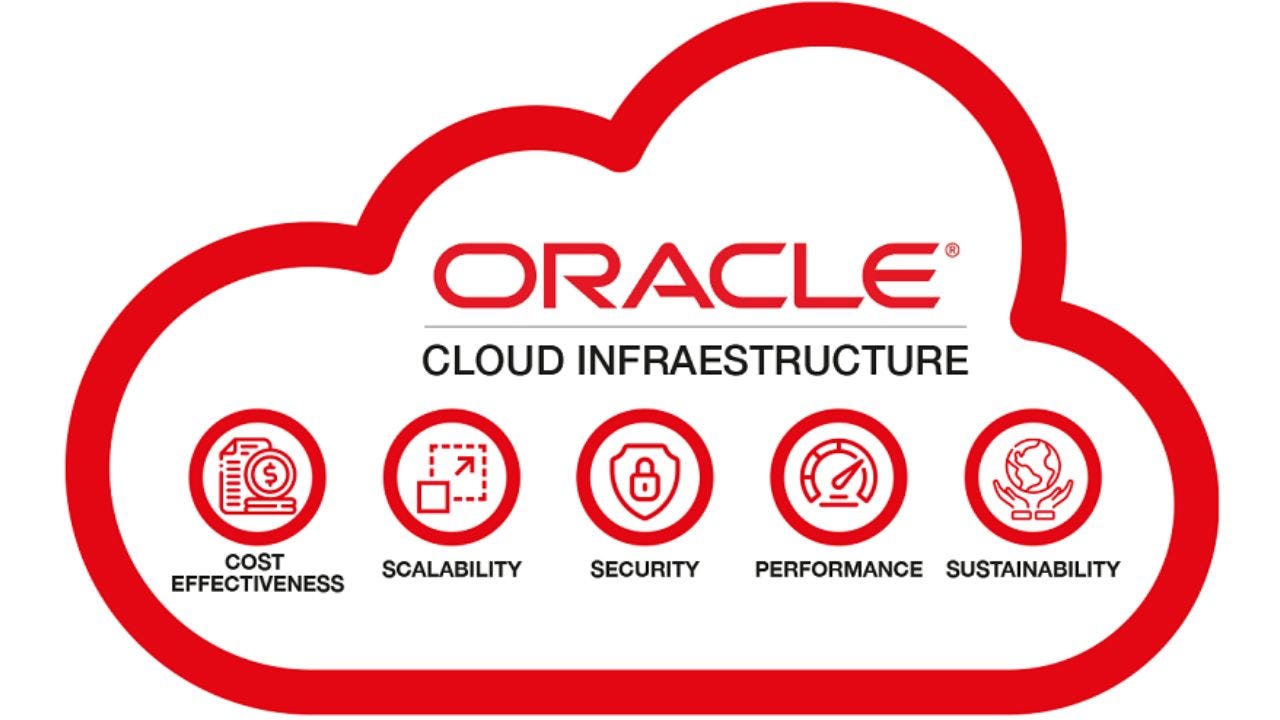
At the same time, Oracle’s messaging increasingly emphasizes AI capabilities embedded across cloud, database, and applications. (Whether you love or dislike the AI buzzword era, that’s clearly where the market is pulling.)
Oracle by layers (a mental model that finally made it click)
When people argue about Oracle, they often talk past each other because they’re talking about different Oracles.
One of the cleanest mental models I’ve found is: Oracle as a multi-layer stack. Each layer has its own customers, economics, and reputation.
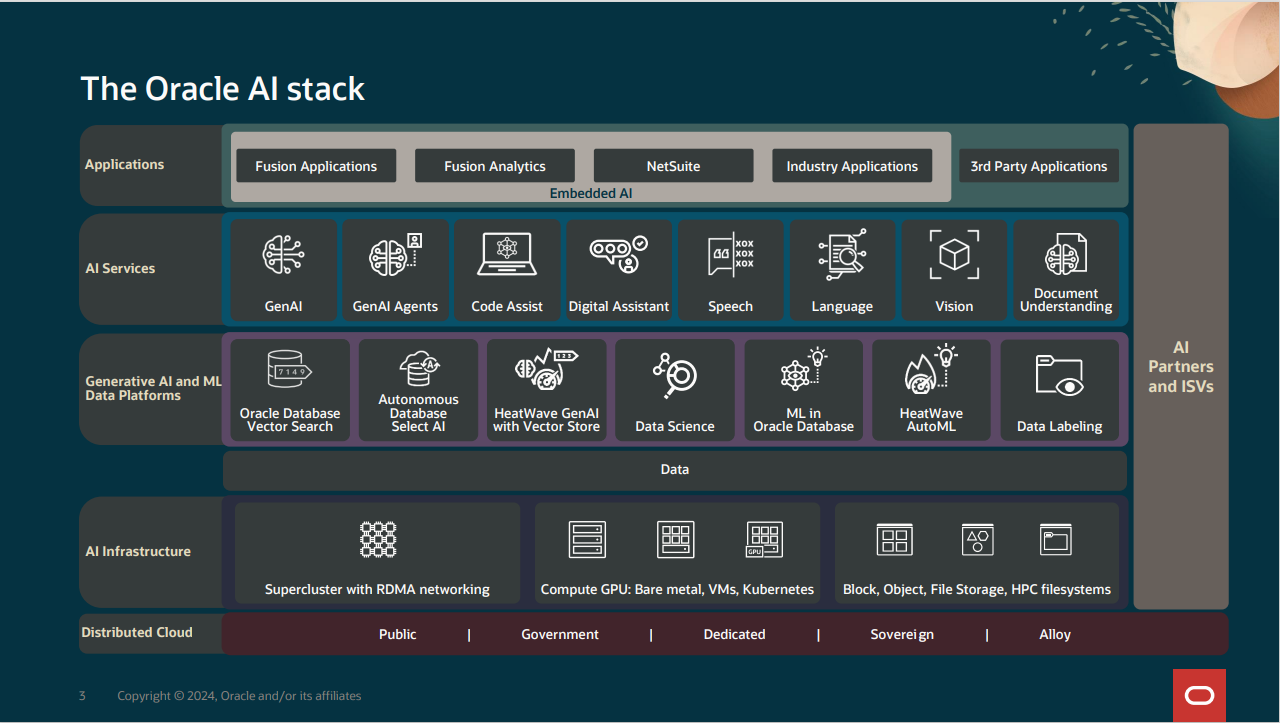
1) Data layer: databases and data platforms
This is the historic core.
- Oracle Database has been a flagship product category for decades, used for high-value transactional systems where reliability and performance matter.
- Oracle also operates across multiple database technologies today (including MySQL as part of the broader portfolio), which matters because enterprise estates are never “one database forever.”
If you’ve ever heard “Oracle is everywhere,” it often starts here: data gravity is real. Once critical data lives somewhere, many surrounding decisions orbit it.
2) Platform / middleware layer: “the plumbing” between apps and data
This layer is less visible but extremely influential.
Think application servers, integration tooling, identity, management, and the runtime environments that let enterprise systems behave consistently.
A concrete example here is Oracle WebLogic Server, which Oracle positions as a leading Java EE application server and part of broader middleware tooling.
This layer matters because large organizations don’t run one app. They run ecosystems. Middleware is how ecosystems stay operational.
3) Applications layer: business suites (ERP, HCM, CX, industry apps)
This is the layer most business leaders recognize immediately: “the system we use for finance,” “the HR platform,” “the supply chain tool,” etc.
Oracle’s applications portfolio includes a broad cloud suite (Oracle highlights ERP, HCM, supply chain, customer experience, and more).
There are also long-standing on-prem and hybrid realities in the real world. For example, Oracle E-Business Suite remains a major product family with a long history and ongoing evolution.
What I find interesting here: applications are where “business meaning” lives. Databases store records, but applications encode how an organization operates.
4) Cloud & infrastructure layer: OCI and large-scale compute
This is the layer most people associate with “modern tech giants”: data centers, networking, compute, storage, GPUs, global regions.
Oracle frames OCI as a consistent set of cloud services across regions, including hybrid/dedicated options.
Oracle also publicly emphasizes cloud networking and high-performance infrastructure as part of OCI’s capabilities.
A subtle but important point: cloud isn’t “just hosting.” It changes the delivery model, pricing model, release cycles, and how products integrate.
Why Oracle acquires so much (and how to think about it calmly)
Oracle’s acquisition history is huge — enough that it can become a caricature. But from a strategy perspective, frequent acquisitions can be understood as a repeatable playbook.
Here are common strategic reasons a company like Oracle acquires:
- Enter a market faster than building from scratch
- Acquire customer bases and long-term enterprise contracts
- Expand the product stack to reduce churn and increase platform stickiness
- Own critical building blocks (technology, infrastructure, developer ecosystems)
- Consolidate in fragmented enterprise software categories
Oracle even maintains a “Strategic Acquisitions” page highlighting how certain deals fit its portfolio narrative.
A few major acquisition examples (and what they added)
I’ll keep this non-polemical and focus on what each acquisition brought into the stack.
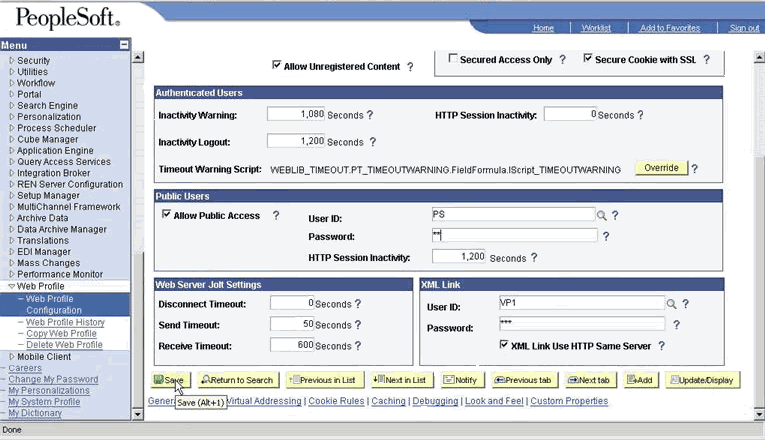
1) PeopleSoft (enterprise applications footprint)
Oracle’s acquisition of PeopleSoft is often described as a major step in deepening enterprise applications coverage (HR and ERP domains especially). Oracle’s own press release archive documents the deal context.
2) Siebel (CRM expansion)
Siebel is historically tied to the CRM space; Oracle’s move into CRM breadth is frequently linked with this era of acquisitions.
3) Sun Microsystems (hardware + Java + MySQL ecosystem)
This one is fascinating because it’s not “just software.” Oracle’s announcement about acquiring Sun highlights the scale and strategic intent. Sun also brought assets with deep industry impact (including Java and MySQL).

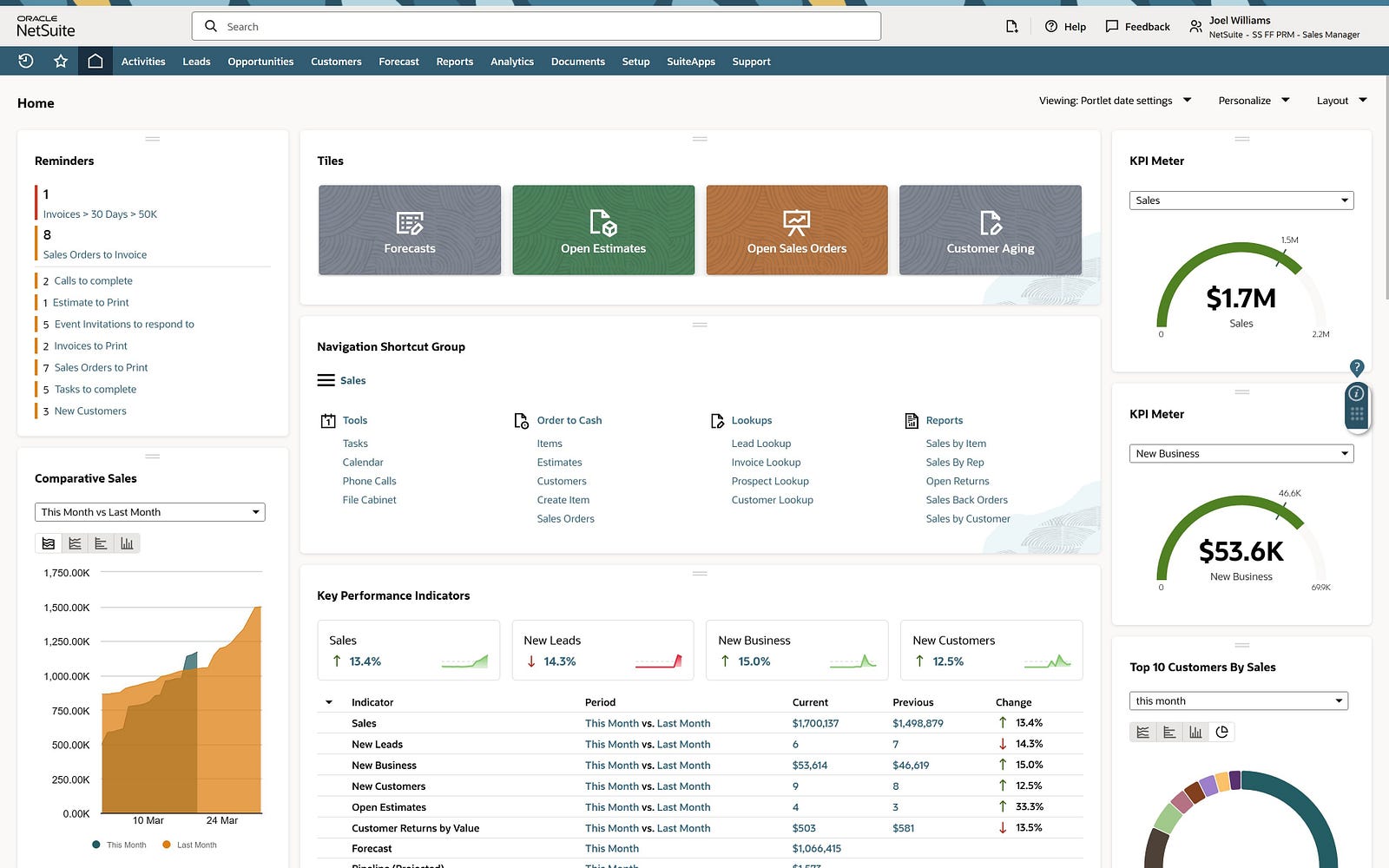
4) NetSuite (cloud ERP for SMB / mid-market)
Oracle’s acquisition page explicitly frames NetSuite as strengthening cloud ERP reach, particularly for small-to-midsize businesses.
5) Cerner (healthcare information systems)
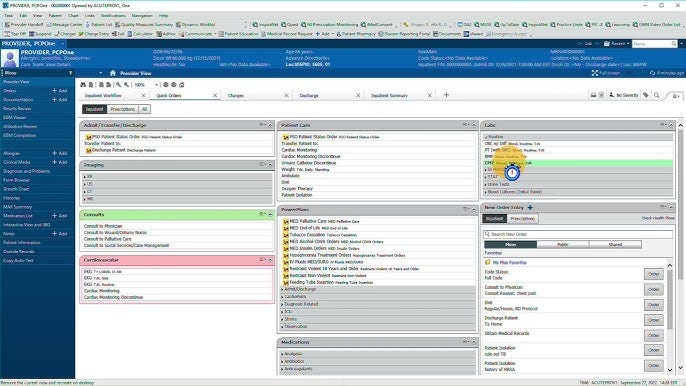
Oracle’s Cerner acquisition is framed as a major move into healthcare IT; Oracle published announcements around the agreement and completion.
If you step back, these aren’t random. They widen Oracle’s coverage across applications + platforms + industry verticals, while keeping the “data and operations backbone” theme intact.
Reputation and perception: three different “Oracle stories”
One reason Oracle is hard to discuss is that the company’s reputation depends on which Oracle you mean.
I find it helpful to separate three narratives:
1) The technical story
This is about databases, performance engineering, enterprise reliability, and the boring-but-important systems that make banks, airlines, retailers, and governments run.
People in this story often evaluate Oracle through engineering lenses: uptime, scalability, operational maturity, ecosystem stability.
2) The business story
This is about enterprise sales cycles, licensing models, long-term support, procurement complexity, and large-scale customer relationships.
People in this story evaluate Oracle through “how enterprises buy software” realities — which can be very different from startup tech culture.
3) The perception story
This is the part that gets loud online.
Oracle has critics. Oracle also has extremely loyal customers. Some debates are about licensing, sales practices, or the friction of dealing with large vendors. Other debates are about whether Oracle “moves fast enough,” or whether acquisitions help or hurt innovation.
What matters to me is: these debates exist, and it’s healthy to acknowledge them — but it’s also easy to oversimplify a complex enterprise company into a meme.
Even in retrospective coverage of major acquisitions, you can see how the same events are framed differently depending on the storyteller (industry press vs corporate narratives vs analysts).
Lessons learned (my personal takeaways)
I’m still learning, but here are a few things I genuinely took away from studying Oracle as a case study:
1) A “tech company” can be many companies layered together
Before this, I thought of Oracle as a single identity. Now I see it as a set of layered businesses:
- deep infrastructure engineering (cloud + regions + networking)
- data platforms that anchor enterprise estates
- middleware that keeps ecosystems coherent
- business apps that encode how companies operate
If you only look at one layer, your picture will be incomplete.
2) Enterprise “moats” are often built on boring things
Consumer tech moats look like virality and UX. Enterprise moats often look like:
- trust
- compliance
- long-term contracts
- integrations
- operational maturity
- global support
Oracle’s footprint makes more sense when you treat those as primary product features, not side effects.
3) Acquisitions can be a strategy, not a personality trait
I used to see frequent acquisitions as “aggressive behavior.” Now I see it as a repeatable mechanism for expanding stack coverage and entering new categories — especially when the goal is to be a platform vendor, not a niche product company.
4) Perception is always lagging (and often simplified)
For me, Oracle shows that public perception doesn’t always track product reality, especially in enterprise. A company can be deeply modernizing in one layer while still being seen through an older story in another layer.
5) The most useful question is not “Do I like Oracle?”
The better question is:
What does Oracle’s evolution teach us about building durable technology businesses?
Because even if you never work with Oracle, the blueprint — data gravity, platforms, ecosystems, acquisitions, vertical expansion, cloud transition — is a masterclass in how large-scale enterprise technology works.
If you made it this far, thank you 🙂
I’m writing more “curious case studies” like this: about how big technology companies are built, how enterprise stacks evolve, and what we can learn from them (without the hype).
If you’d like to get the next one in your inbox, subscribe on Medium.
And if you want the shorter, more frequent versions (notes, diagrams, and behind-the-scenes learnings), follow me on LinkedIn or on my webpage.
See you in the next deep dive.